
Sensitive Skin Relief Report
Why Doctors Keep Telling Patients to Stop Wiping - And What Thousands of Quiet Sufferers Switched To Instead
If going to the bathroom has become something you brace for, this might be the most useful eight minutes of your week. The answer is not another cream. It is subtracting the thing causing the friction in the first place.
By The Comfort Standard Community | 8 min read
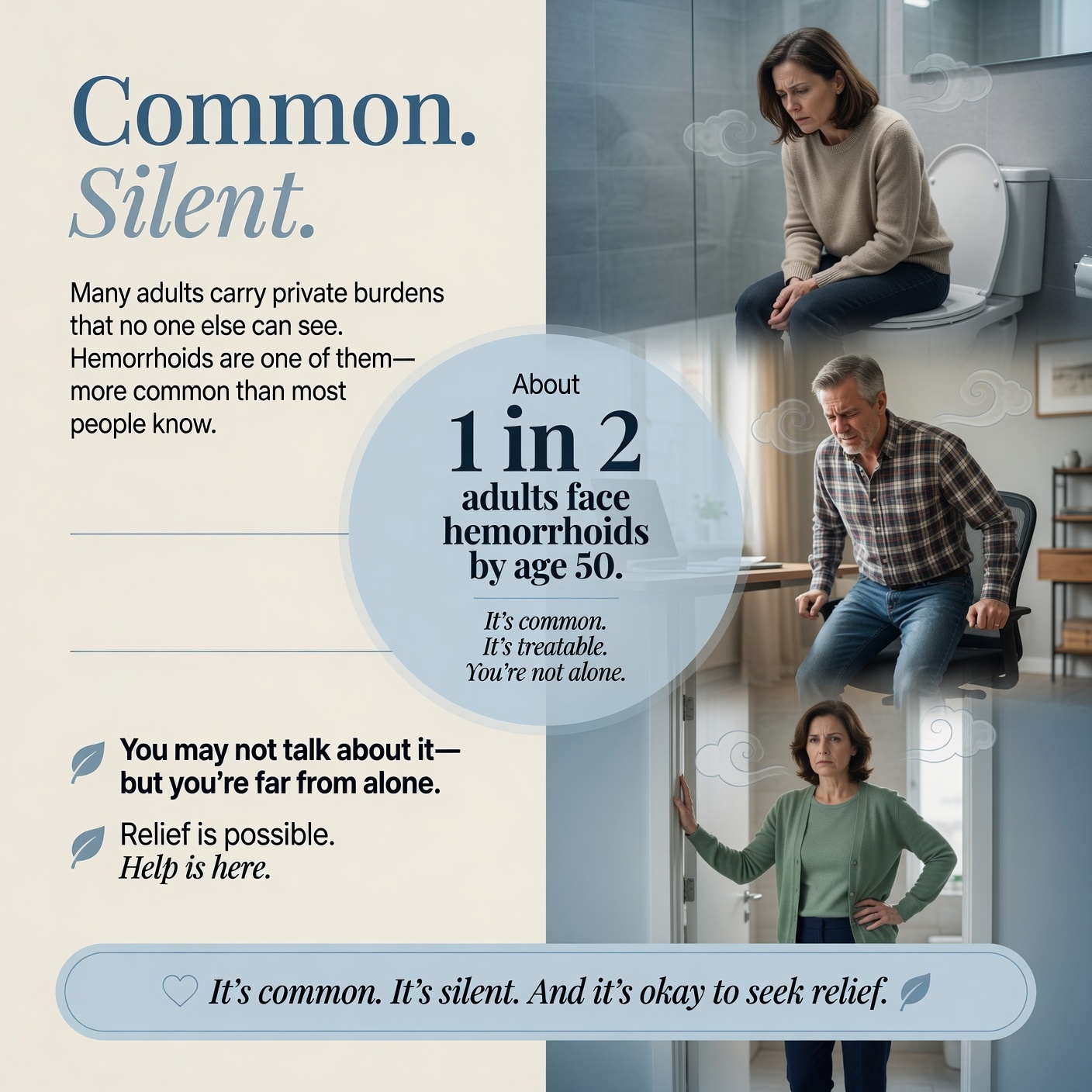
Let's begin with a statistic that never gets said out loud, because the people it describes do not talk about it:
About half of adults will deal with hemorrhoids by age 50. Add everyone managing IBS, chronic skin sensitivity, fissures, or postpartum recovery, and "discomfort in the bathroom" quietly becomes one of the most common adult experiences in America.
Evidence note: The National Institute of Diabetes and Digestive and Kidney Diseases says hemorrhoids affect about 1 in 20 Americans, and about half of adults older than 50 have them. NIDDK/NIH source.
Common - and completely silent. You can announce a bad back to an entire office. You can wear a knee brace to a barbecue. But this? This gets managed alone, behind a locked door, with a rotation of creams, pads, and wipes, and a growing habit of planning your life around bathroom access.
In the anonymous corners of the internet where people finally do talk, the descriptions are remarkably consistent:
If any of those sentences could have been yours, keep reading. Because there is a strong chance you have been attacking this problem from the wrong end - treating the symptoms of your routine while leaving the routine itself untouched.
The Question That Reframes Everything
Here is a thought experiment that appears, in some form, in almost every one of those threads - usually right before somebody has their lightbulb moment:
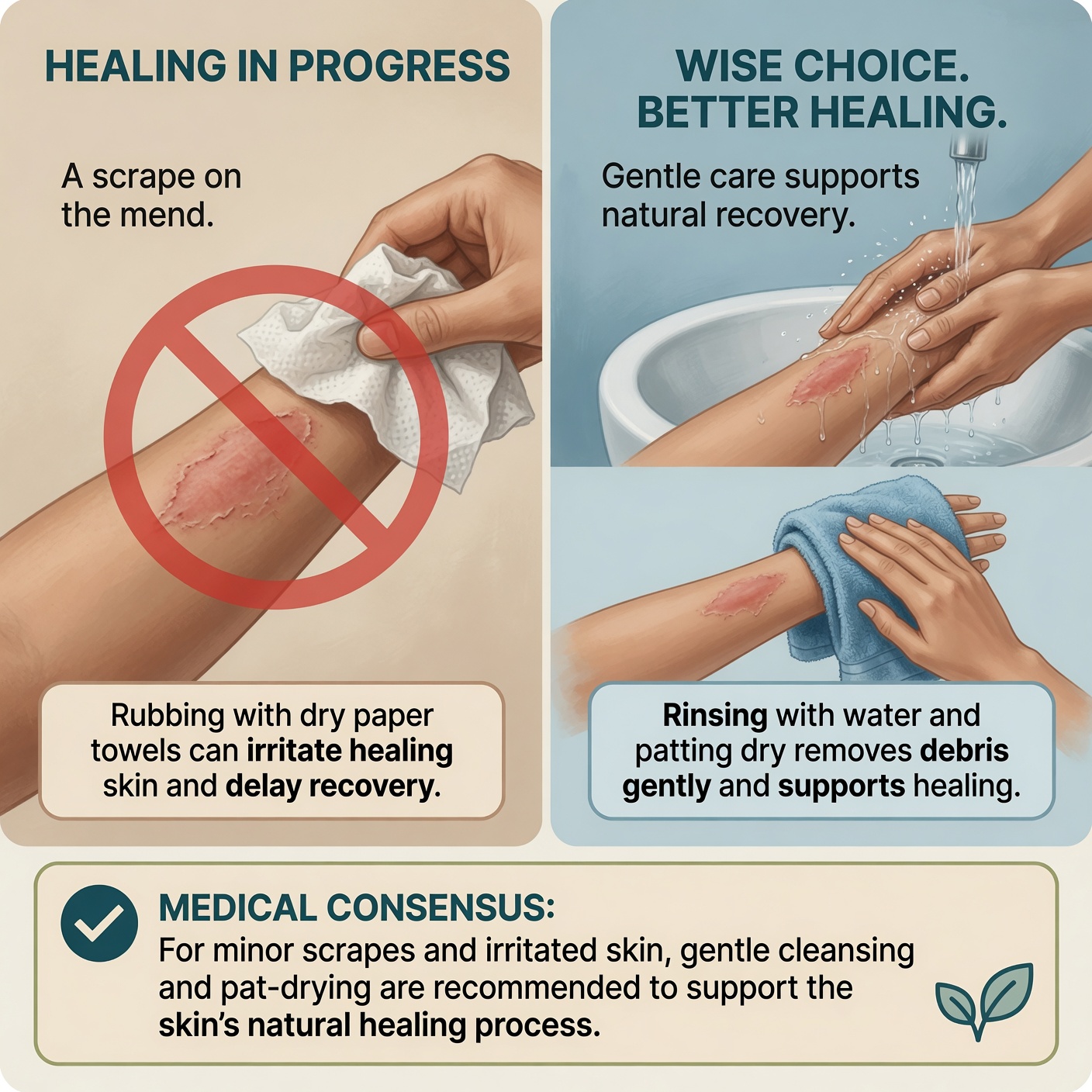
If you had a raw, healing scrape on your forearm, would you rub it briskly with dry paper five times a day?
Of course not. You would expect it to stay inflamed forever. You would wash it gently with water, pat it dry, and leave it alone - because everyone knows the first rule of irritated skin is to stop irritating it.
Now consider what standard American bathroom routine does to the most sensitive skin on the body - skin that, for millions of people, is already inflamed, swollen, fissured, or healing:
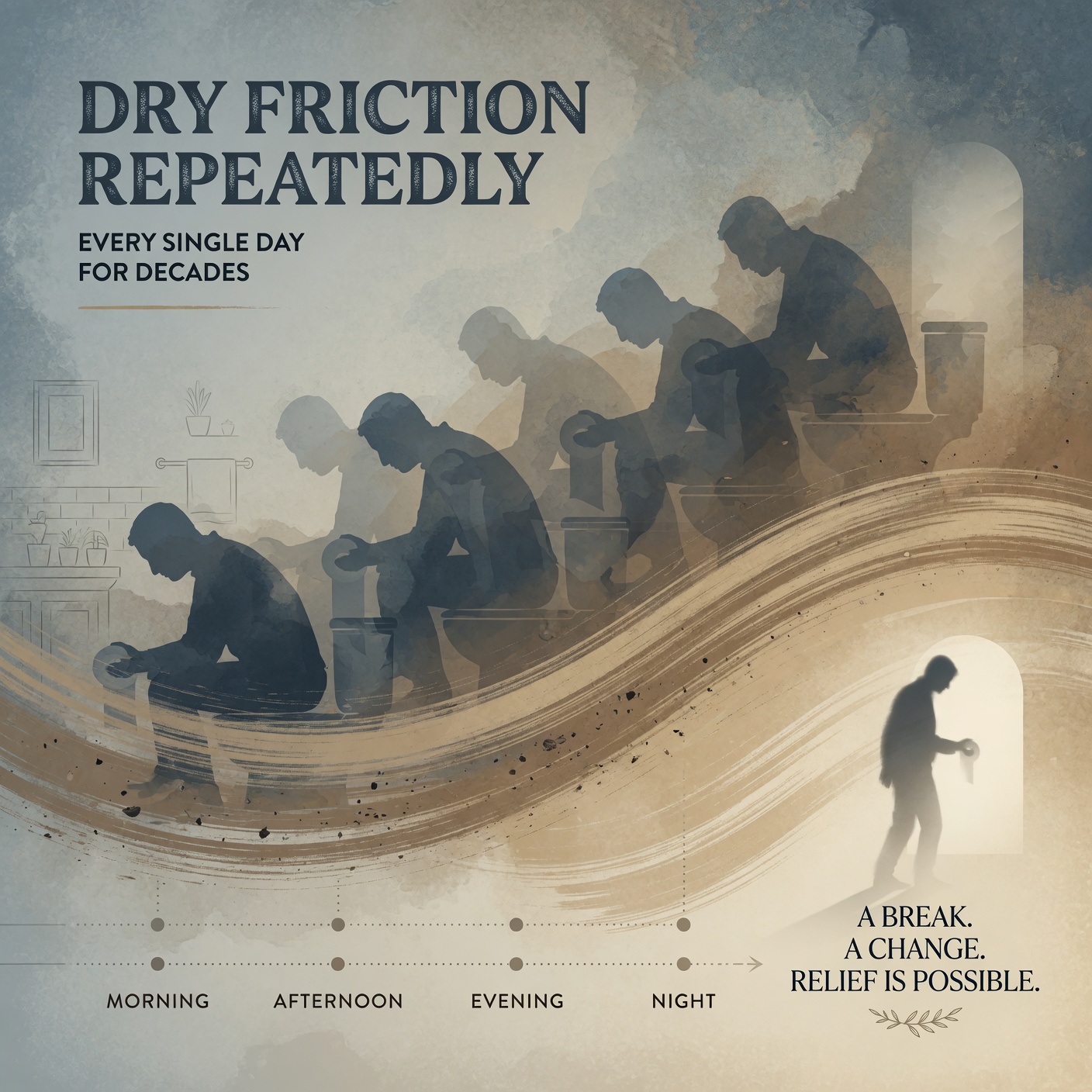
Dry friction. Repeatedly. Every single day. For decades.
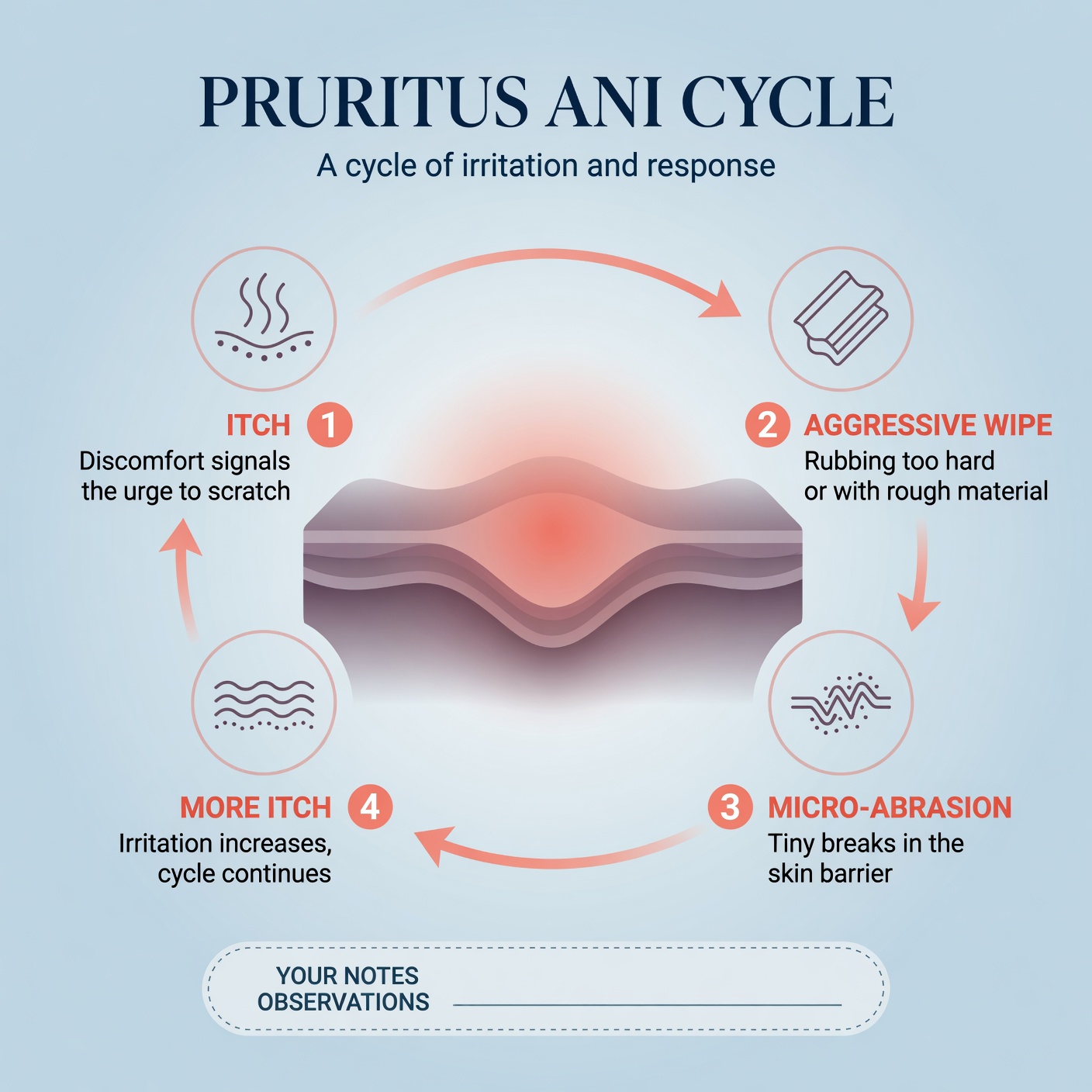
Dermatologists have a name for one common result - pruritus ani, the maddening itch-scratch-wipe cycle - and one of its best-documented drivers is, ironically, over-cleaning with friction: aggressive wiping that strips and micro-abrades the skin, which causes irritation, which feels unclean, which triggers more wiping.
Evidence note: A clinical review in Clinics in Colon and Rectal Surgery describes local irritation as a major driver of pruritus ani, while the American Society of Colon and Rectal Surgeons lists moisture, underlying anal conditions, and repeated scratching as common contributors. NIH review · ASCRS patient guide.
Which is why, if you have ever actually asked a doctor - a proctologist, an OB, a colorectal nurse - about caring for that area during a flare-up, recovery, or surgery aftercare, you have heard the same instructions patients have received for generations:
That is the boring, unglamorous, decades-old medical consensus. Water for cleansing. Minimal friction. Gentleness as a protocol, not a luxury.
Evidence note: NIDDK lists warm-water sitz baths as a home-care step for hemorrhoid pain, and Cleveland Clinic notes that plain warm water is often all that is needed for a sitz bath. The point is not a fancy product claim; it is a simple care principle: water first, irritation last. NIDDK treatment guidance · Cleveland Clinic sitz bath guide.
The Wet Wipe Detour
Most sufferers figure out the friction problem on their own, at least intuitively. And most reach for the same fix: wet wipes. Moist, cooling, marketed with clouds and the word "sensitive." It feels like the answer.
For a lot of people, it is a trap - and this is one of the most repeated hard-won lessons in the forums.
Problem one: the chemistry. To keep wipes shelf-stable, many are preserved with compounds like methylisothiazolinone (MI), a preservative strongly associated with allergic contact dermatitis.
Problem two: the plumbing. "Flushable" is a marketing claim, not an engineering one. Wipes do not disintegrate like toilet paper; they snag, accumulate, and clog.
Problem three: the cost. $15-30 a month, forever, to manage a problem rather than remove it.
Evidence note: Dermatology literature has linked MI/MCI preservatives in moist toilet paper and wipes to perianal and perineal allergic contact dermatitis. On the plumbing side, NACWA estimated wipes add about $441 million per year in operating costs for U.S. clean-water utilities. JAMA Dermatology · PubMed wet-wipe dermatitis case · NACWA wipes cost report.
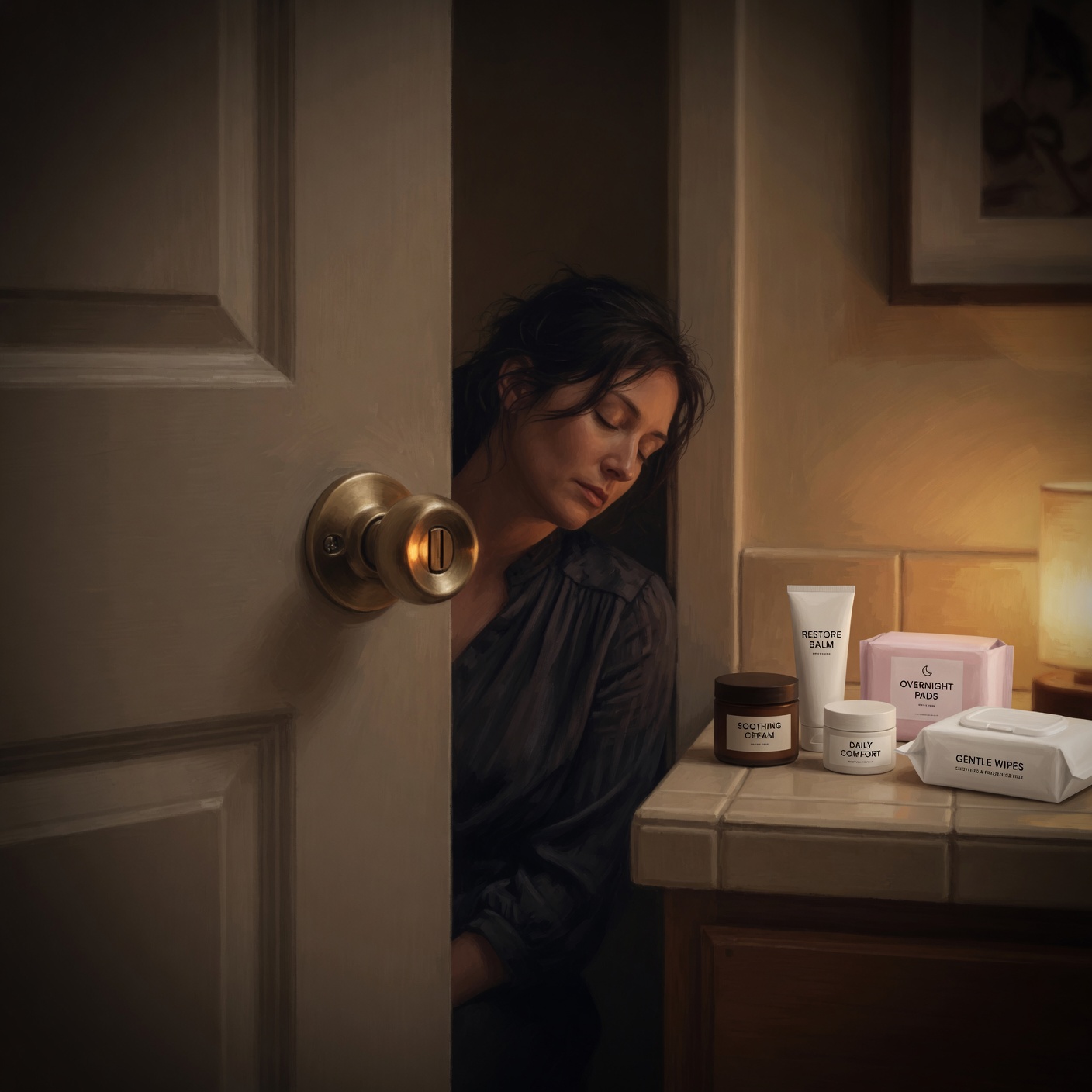
So the scorecard: dry paper applies friction to skin that needs the opposite. Wipes can add allergens and destroy pipes. Both cost money forever. And both are attempts to approximate the thing doctors actually recommend - washing with water - without doing it.
What The Switch Actually Feels Like
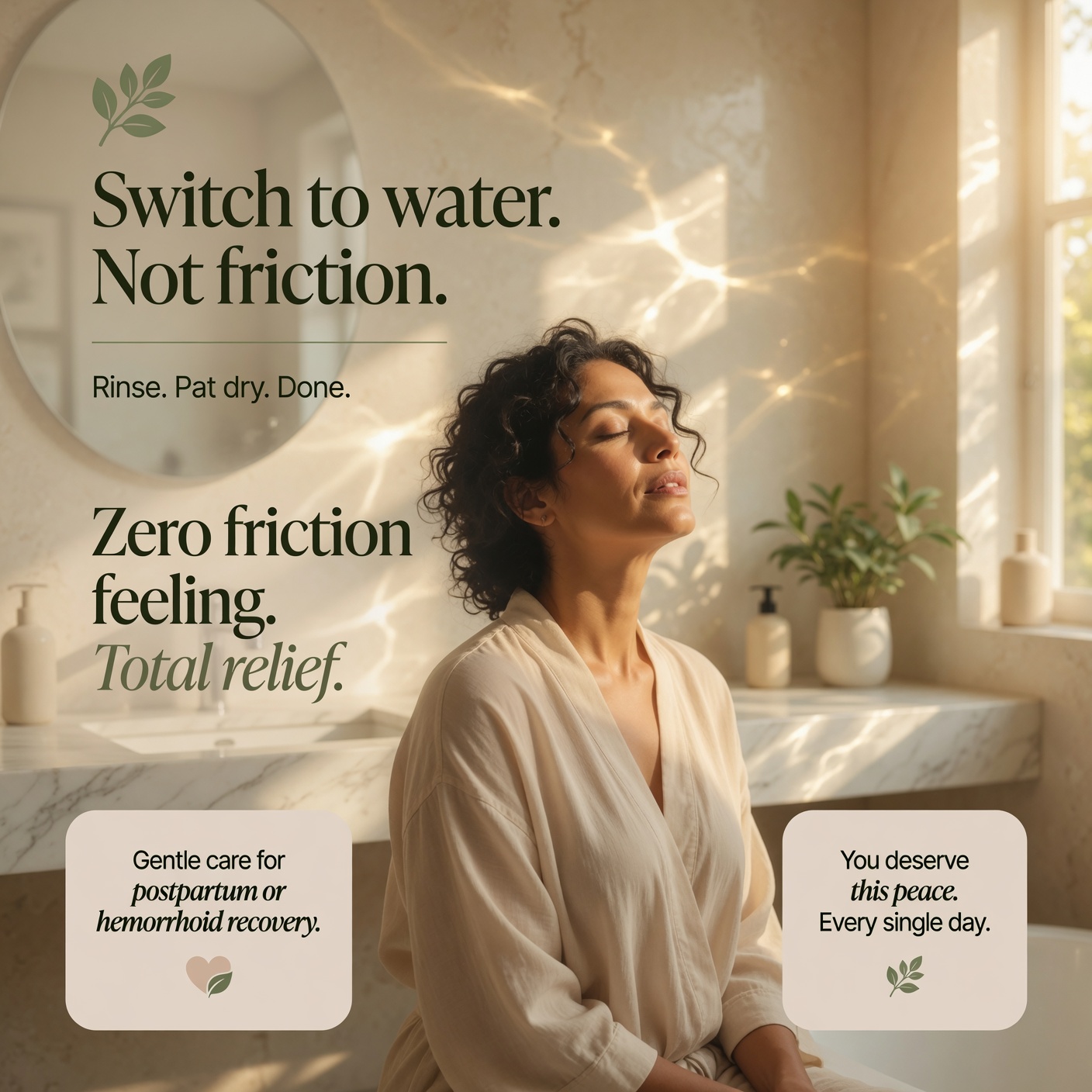
A bidet attachment does one job: it puts a stream of clean water exactly where the friction used to be. You rinse - no rubbing, no chemicals - then pat dry with a small amount of paper or a soft towel, exactly the way post-surgical instruction sheets describe.
Your hands touch nothing. On a quality design, the nozzle should touch nothing either. It should stay hidden behind a guard when idle, rinse itself before and after use, extend only when water pressure is active, then retract back inside to cover the spray opening.
Evidence note: The hygiene logic here is grounded in two separate bodies of research: toilet-flush studies show that contaminated toilets can generate bioaerosols, and bidet research has specifically studied how nozzle cleanliness affects spray-water quality. That does not mean a retractable nozzle makes a bathroom sterile; it means exposed hardware in the bowl is a design problem worth avoiding. Toilet plume literature review · Bidet nozzle cleanliness study.
Notice what is actually being described in these: the absence of dread. Not a gadget experience - the end of bracing yourself for a basic bodily function. Give chronically irritated skin several consecutive friction-free days and the logic explains itself. Nothing was "treated." Something was stopped.
Why Retractable Nozzle Design Is The Detail That Matters
If you have researched bidet attachments before, you know the $25-40 models. Here is what the sufferer communities specifically warn about them:
The nozzle can sit exposed. If the spray outlet remains open inside the bowl, it is spending its idle time in the exact splash zone you are trying to clean away from.
Their pressure control is crude. Forum shorthand: "two settings - nothing, and regret." Sensitive users need the bottom of the dial to be genuinely gentle.
Self-cleaning alone is not the full answer. Rinsing the nozzle matters, but hiding it behind a protective guard between uses is what helps reduce exposure to toilet splash and cross contamination.
Evidence note: Laboratory reviews of toilet plume research found that potentially infectious aerosols may be produced during flushing and can contaminate nearby surfaces. For a nozzle, the practical design takeaway is simple: rinse it, retract it, and keep the water outlet covered when it is not in use. Modern flush-toilet aerosol study.
This is exactly the gap the WashyCare bidet attachment by Hiwelly was designed to close - a sensitive-skin-first spec at an attachment price:
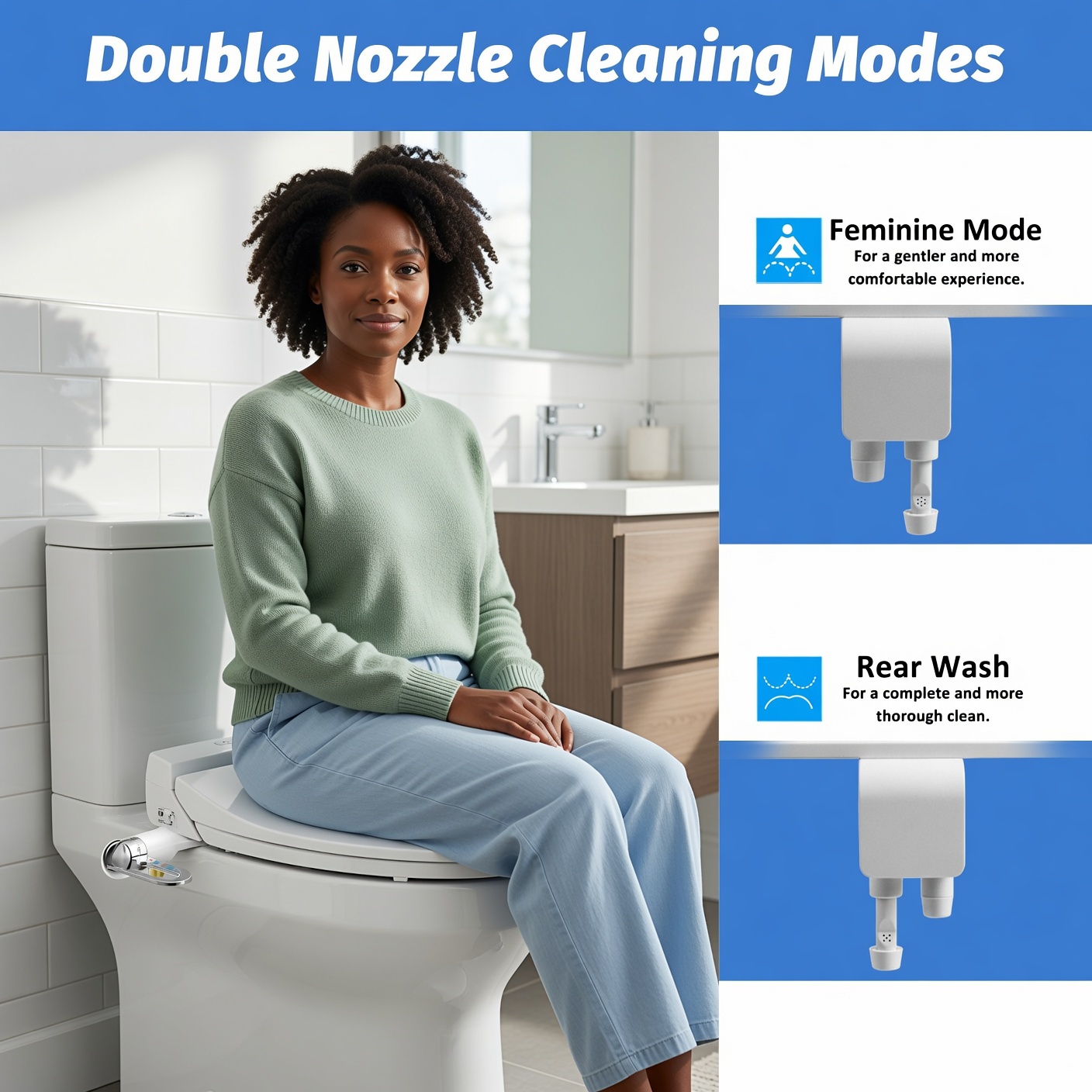
- Retractable nozzle design that stays hidden when idle, extends only under water pressure, then retracts to cover the water outlet after use
- A precision pressure dial that starts feather-gentle for sensitive users, then rises gradually from there
- A dedicated soft front-wash mode designed for feminine care and postpartum recovery
- Self-cleaning rinse mode to clean the nozzle before and after use
- Guarded hidden storage to help avoid bowl splash, contamination, and cross-contact between uses
- 15-minute installation on standard two-piece US toilets, fully reversible for renters
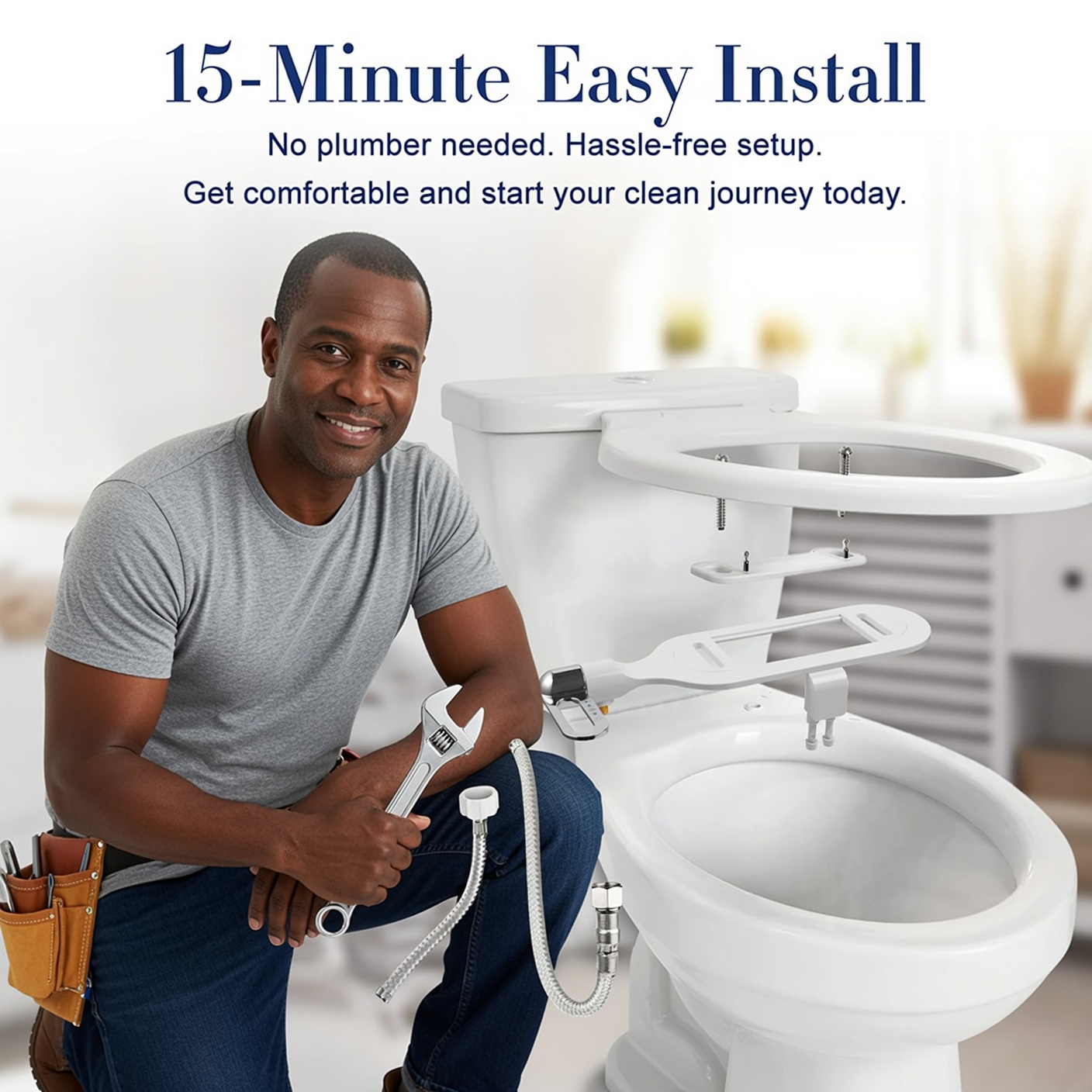
No motors, no app, nothing to overthink. It is the medical-consensus routine - water, no friction, pat dry - built into the toilet you already own, with a nozzle that is protected when it is not actively rinsing.
The Honest Math
Right now, managing discomfort the standard way costs a typical sufferer something like this, every month, forever:
| Monthly item | Typical range | What it is really doing |
|---|---|---|
| Wet wipes | $15-30 | Adding moisture while keeping a disposable routine in place |
| Creams, ointments, pads | $10-40 | Managing irritation after it starts |
| Premium ultra-soft toilet paper | $10-20 | Paying the sandpaper tax |
| Total ongoing routine | $35-90/month | Several hundred to over a thousand dollars a year |
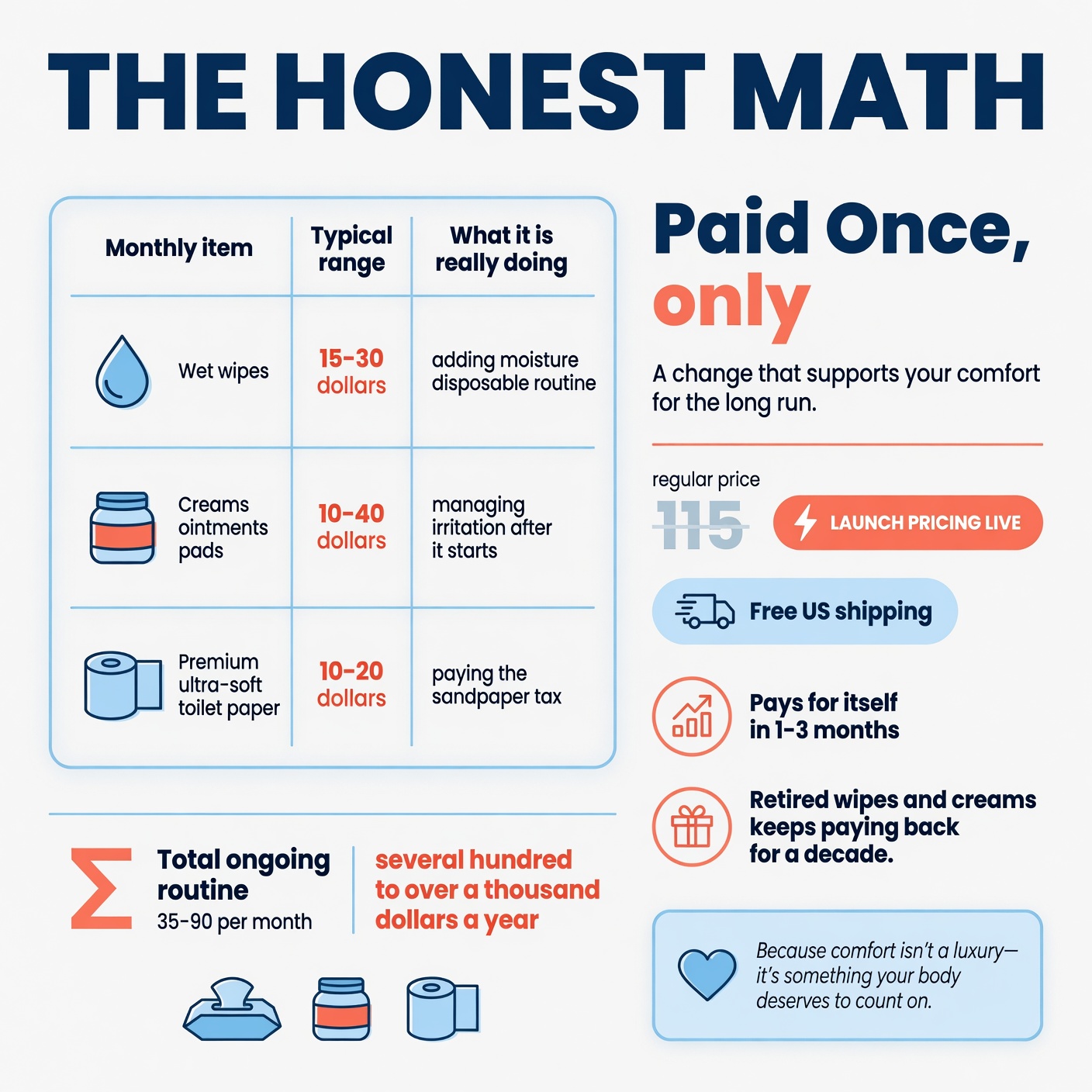
WashyCare is Paid Once. Regular price is $115; Exciting news: our exclusive launch-week offers are officially active right now! Free US shipping. It typically pays for itself in one to three months of retired wipes and creams - and then keeps paying you back for a decade.
Bidet households also report cutting toilet paper use by 75-80%, since paper's only remaining job is patting dry.
But run the math that actually matters: what is one year without dreading your own bathroom worth? The people in those threads have an answer, and it is not $100. It is "why did no one tell me sooner."
Try It On Your Skin, Not On Faith
Trust is earned cautiously in this category - you have likely bought "gentle" products before that were not. So Hiwelly structures the risk in your favor:

Every order includes:
- WashyCare bidet attachment - retractable hidden nozzle, self-cleaning rinse mode, and gentle front-wash mode
- Every hose, adapter, and fitting for standard US toilets - no hardware-store trip
- Bonus PDF: The Gentle Routine Guide - 15-minute install walkthrough, pressure and nozzle-care settings for sensitive skin, and the pat-dry protocol nurses teach post-surgery patients
- Free US shipping with tracking - Free ships with no hidden cost
- 30-Day Gentle Guarantee
$79.95 TODAY $115
Free US shipping, 30-day guarantee, and support from real humans.
Quantities Are Strictly Limited and the Sale May End Early. Final Cutoff: Sunday, 11:59 PM PT.
Claim Your WashyCare Now! Limited Promotional OrdersThe Bottom Line
You have treated this like a personal flaw for years - something to manage quietly with creams and careful scheduling and a tolerance you never volunteered for. It was never a flaw. It was a method: friction applied daily to skin that medicine has always said should get water instead.
Methods can be replaced. This one takes fifteen minutes and a wrench.
Be gentle with yourself. Literally.
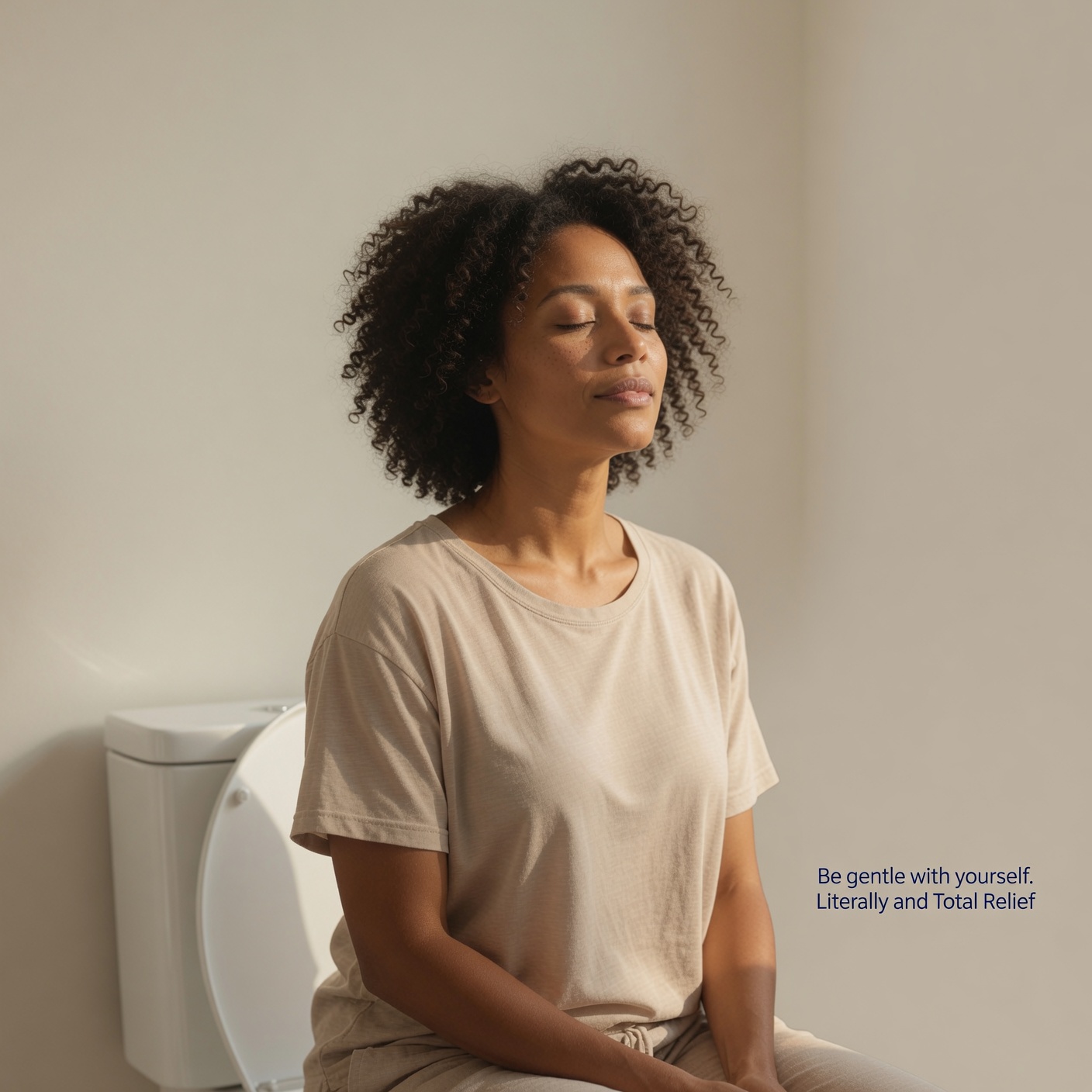
Fits standard two-piece US toilets - 30-second compatibility check on the order page. Not a medical device; if you have a diagnosed condition, follow your doctor's guidance.
Sources reviewed for this article:
- NIDDK/NIH hemorrhoid prevalence and treatment guidance
- NIH and ASCRS clinical guidance on pruritus ani and irritation cycles
- JAMA Dermatology and PubMed reports on wet-wipe preservative dermatitis
- NACWA utility-cost report on wipes in wastewater systems
- Peer-reviewed toilet plume and bidet-nozzle cleanliness studies